


As a supplier of Copper Driers, I often encounter inquiries from customers regarding the suitability of using copper driers for drying metal parts. This blog post aims to explore this topic in depth, providing a comprehensive analysis based on scientific principles and practical applications.
Understanding Copper Driers
Copper driers are essential components in various industries, particularly in air conditioning and refrigeration systems. They are designed to remove moisture, contaminants, and acids from the refrigerant, ensuring the efficient and reliable operation of the system. Copper is a popular choice for driers due to its excellent thermal conductivity, corrosion resistance, and compatibility with refrigerants.
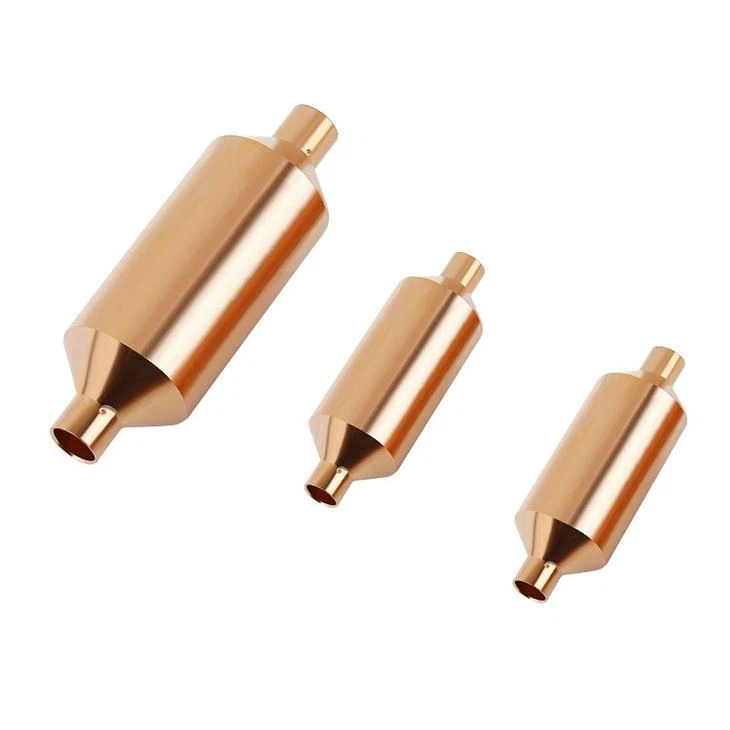

The basic structure of a copper drier consists of a copper shell filled with a desiccant material, such as activated alumina or molecular sieve. The desiccant absorbs moisture from the refrigerant as it passes through the drier, preventing ice formation and other issues that can affect the performance of the system. Additionally, copper driers can also trap contaminants and acids, protecting the compressor and other components from damage.
Can a Copper Drier be Used for Drying Metal Parts?
The question of whether a copper drier can be used for drying metal parts is a complex one that depends on several factors. While copper driers are primarily designed for use in refrigeration systems, they can potentially be adapted for other applications, including the drying of metal parts. However, there are several considerations that need to be taken into account before using a copper drier for this purpose.
1. Moisture Removal Capacity
One of the key factors to consider when using a copper drier for drying metal parts is its moisture removal capacity. Metal parts can accumulate moisture during manufacturing, storage, or transportation, and it is essential to ensure that the copper drier has the ability to effectively remove this moisture. The moisture removal capacity of a copper drier depends on several factors, including the type and amount of desiccant used, the flow rate of the air or gas passing through the drier, and the temperature and humidity conditions of the environment.
2. Compatibility with Metal Parts
Another important consideration is the compatibility of the copper drier with the metal parts being dried. Copper is a reactive metal that can potentially react with certain metals, such as aluminum or magnesium, causing corrosion or other damage. It is essential to ensure that the copper drier is compatible with the metal parts being dried to avoid any potential issues. Additionally, the desiccant material used in the copper drier should also be compatible with the metal parts, as some desiccants can contain chemicals that can react with certain metals.
3. Contamination Risks
When using a copper drier for drying metal parts, there is a risk of contamination from the desiccant material or other components of the drier. The desiccant material can release small particles or dust into the air or gas passing through the drier, which can potentially contaminate the metal parts. It is essential to ensure that the copper drier is designed to minimize the risk of contamination and that appropriate filtration systems are in place to remove any particles or dust from the air or gas before it comes into contact with the metal parts.
4. Temperature and Pressure Requirements
The temperature and pressure requirements of the drying process are also important considerations when using a copper drier for drying metal parts. Copper driers are typically designed to operate within a specific temperature and pressure range, and it is essential to ensure that the drying process is carried out within these parameters to ensure the effective operation of the drier. Additionally, the temperature and pressure requirements of the metal parts being dried should also be taken into account, as some metals can be sensitive to high temperatures or pressures.
Potential Applications of Copper Driers for Drying Metal Parts
Despite the challenges and considerations outlined above, there are several potential applications where copper driers can be used for drying metal parts. Some of these applications include:
1. Automotive Manufacturing
In the automotive manufacturing industry, copper driers can be used to dry metal parts such as engine components, transmission parts, and brake components. These parts can accumulate moisture during the manufacturing process, and it is essential to ensure that they are thoroughly dried before assembly to prevent corrosion and other issues. Copper driers can be used to remove moisture from the air or gas used in the drying process, ensuring that the metal parts are dried effectively.
2. Aerospace Manufacturing
In the aerospace manufacturing industry, copper driers can be used to dry metal parts such as aircraft engine components, landing gear parts, and structural components. These parts are often made from high-strength metals that are sensitive to moisture and corrosion, and it is essential to ensure that they are dried thoroughly to maintain their integrity and performance. Copper driers can be used to remove moisture from the air or gas used in the drying process, ensuring that the metal parts are dried effectively and safely.
3. Electronics Manufacturing
In the electronics manufacturing industry, copper driers can be used to dry metal parts such as printed circuit boards, connectors, and semiconductor components. These parts can accumulate moisture during the manufacturing process, and it is essential to ensure that they are dried thoroughly to prevent corrosion and other issues that can affect the performance of the electronics. Copper driers can be used to remove moisture from the air or gas used in the drying process, ensuring that the metal parts are dried effectively and without causing any damage to the electronics.
Conclusion
In conclusion, while copper driers are primarily designed for use in refrigeration systems, they can potentially be adapted for other applications, including the drying of metal parts. However, there are several considerations that need to be taken into account before using a copper drier for this purpose, including its moisture removal capacity, compatibility with metal parts, contamination risks, and temperature and pressure requirements. By carefully considering these factors and ensuring that the copper drier is designed and operated appropriately, it is possible to use copper driers effectively for drying metal parts in a variety of industries.
If you are interested in learning more about our Copper Drier Filter, AC Filter Driers, or Filter Drier Pipe Fitting products and their potential applications for drying metal parts, please do not hesitate to contact us. We would be happy to discuss your specific requirements and provide you with more information about our products and services.
References
- ASHRAE Handbook - Refrigeration. American Society of Heating, Refrigerating and Air-Conditioning Engineers.
- Perry's Chemical Engineers' Handbook. McGraw-Hill Education.
- Refrigeration and Air Conditioning Technology. Eugene Silberstein.