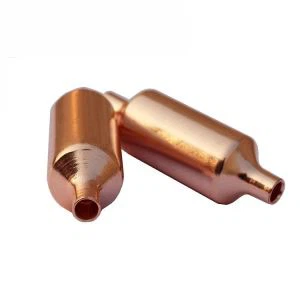
Hey there! As a supplier of U copper pipes, I often get asked about how to measure the diameter of these pipes accurately. It might seem like a simple task, but getting it right is super important, especially when you're dealing with air - conditioning and refrigeration systems. In this blog, I'll share some practical methods and tips to help you measure the diameter of U copper pipes accurately.
Why Accurate Measurement Matters
First off, let's talk about why it's crucial to measure the diameter of U copper pipes accurately. In the HVAC (Heating, Ventilation, and Air Conditioning) and refrigeration industries, these pipes are used to transfer refrigerant. If the pipe diameter is off, it can lead to all sorts of problems. For instance, a pipe that's too small can cause high pressure drops, reducing the efficiency of the system. On the other hand, a pipe that's too large might not provide enough velocity for proper refrigerant flow. So, accurate measurement is key to ensuring the optimal performance of the system.
Tools You'll Need
Before we dive into the measurement methods, let's go over the tools you'll need. You don't need a bunch of fancy equipment. Here are the basics:


- Vernier Caliper: This is a must - have tool. It can measure both the outer and inner diameters of the pipe with high precision. You can find a good quality vernier caliper at most hardware stores.
- Micrometer: For even more accurate measurements, especially for very small diameter pipes, a micrometer is a great option. It can measure to a very fine degree, usually up to 0.001 inches or 0.01 mm.
- Tape Measure: A simple tape measure can be useful for getting a rough estimate of the outer diameter, especially for larger pipes.
Measuring the Outer Diameter
Let's start with measuring the outer diameter of the U copper pipe. This is the most common measurement you'll need to take.
- Using a Vernier Caliper
- First, open the jaws of the vernier caliper wide enough to fit around the pipe.
- Gently place the jaws around the pipe at the widest part of the curve. Make sure the caliper is perpendicular to the axis of the pipe.
- Slowly close the jaws until they just touch the outer surface of the pipe. Be careful not to apply too much pressure, as this can deform the pipe and give an inaccurate measurement.
- Read the measurement on the scale of the vernier caliper. The main scale gives the whole number part of the measurement, and the vernier scale gives the decimal part.
- Using a Micrometer
- Similar to the vernier caliper, open the anvil and spindle of the micrometer.
- Place the pipe between the anvil and spindle.
- Rotate the thimble until the spindle just touches the outer surface of the pipe. You'll feel a slight resistance when it's in the right position.
- Read the measurement on the sleeve and thimble of the micrometer.
- Using a Tape Measure
- Wrap the tape measure around the pipe at the widest part of the curve.
- Make sure the tape measure is snug but not too tight.
- Note the measurement where the tape measure meets itself. To get the diameter, divide this measurement by π (approximately 3.14). Keep in mind that this method is less accurate than using a caliper or micrometer.
Measuring the Inner Diameter
Measuring the inner diameter is a bit more tricky, but it's important, especially if you need to know the flow capacity of the pipe.
- Using a Vernier Caliper
- Some vernier calipers come with a smaller set of jaws for measuring inner diameters. If yours does, open these jaws and insert them into the pipe.
- Gently expand the jaws until they just touch the inner surface of the pipe.
- Read the measurement on the scale as you did for the outer diameter.
- Using a Depth Micrometer
- A depth micrometer can also be used to measure the inner diameter. Insert the anvil of the depth micrometer into the pipe and adjust the spindle until it touches the opposite inner wall.
- Read the measurement on the micrometer scale.
Dealing with Curved Pipes
One of the challenges with U copper pipes is that they're curved. This can make it a bit difficult to get an accurate measurement, especially if the curve is sharp. Here are some tips:
- Take Multiple Measurements: Measure the diameter at several points along the curve of the pipe. This can help you account for any variations in the diameter due to the curvature.
- Use a Flexible Measuring Tool: There are flexible calipers available that can conform to the shape of the curved pipe. These can be very useful for getting a more accurate measurement of the outer diameter.
Quality Control and Verification
Once you've taken your measurements, it's a good idea to double - check them. You can do this by taking multiple measurements with different tools or having someone else measure the pipe as well. If you're supplying U copper pipes, it's also important to have a quality control process in place. This can involve regular calibration of your measuring tools and random sampling of pipes for measurement.
Related Products
If you're in the market for U copper pipes or related fittings, we've got some great options. Check out our Copper Fittings 180 Degree Elbow, which are perfect for making U - shaped connections. We also have 15mm Copper U Bend that are commonly used in many air - conditioning and refrigeration systems. And don't forget about our Refrigeration Copper Tubing Pipe Fittings, which are essential for a proper installation.
Conclusion
Accurately measuring the diameter of U copper pipes is an important skill, whether you're an HVAC technician, a contractor, or a supplier like me. By using the right tools and following the methods I've outlined in this blog, you can ensure that you get accurate measurements every time. If you have any questions or need more information about U copper pipes or our products, feel free to reach out. We're always here to help you with your copper pipe needs. Whether you're working on a small DIY project or a large commercial installation, we've got the right products for you. So, don't hesitate to contact us for all your U copper pipe and fitting requirements. Let's work together to make your projects a success!
References
- "Handbook of Copper and Copper Alloys" by ASM International
- "HVAC and Refrigeration Technology" by Eugene Silberstein