


In the world of air - conditioning and refrigeration systems, copper U bends are indispensable components. They play a crucial role in facilitating the flow of refrigerant within the system, allowing for efficient heat exchange and overall system performance. Among the various types of copper U bends available in the market, red copper U bends and regular copper U bends are two commonly discussed options. As a supplier of red copper U bends, I am well - versed in the characteristics of both types and would like to share in - depth insights into their differences.
Material Composition
The fundamental difference between red copper U bends and regular copper U bends lies in their material composition. Red copper, also known as pure copper or oxygen - free copper, is composed of at least 99.9% copper. This high purity gives red copper its distinct reddish - brown color and excellent electrical and thermal conductivity. On the other hand, regular copper U bends are typically made from copper alloys. These alloys often contain small amounts of other metals such as zinc, tin, or phosphorus, which are added to enhance certain properties like strength, hardness, or corrosion resistance.
The high purity of red copper in red copper U bends makes them an ideal choice for applications where high thermal conductivity is required. In air - conditioning and refrigeration systems, efficient heat transfer is crucial for optimal performance. The superior thermal conductivity of red copper allows for faster and more effective heat exchange between the refrigerant and the surrounding environment. This means that systems using red copper U bends can achieve better cooling or heating efficiency, reducing energy consumption and potentially lowering operating costs.
Physical Properties
1. Thermal Conductivity
As mentioned earlier, red copper has an extremely high thermal conductivity. This property is essential in air - conditioning and refrigeration systems as it enables rapid heat transfer. When the refrigerant passes through a red copper U bend, heat can be quickly dissipated or absorbed, depending on the stage of the refrigeration cycle. In contrast, regular copper U bends, due to the presence of alloying elements, have a slightly lower thermal conductivity. While this may not be a significant issue in some less - demanding applications, for high - performance systems, the difference in thermal conductivity can have a noticeable impact on overall efficiency.
2. Strength and Hardness
Regular copper U bends, being made of copper alloys, generally have higher strength and hardness compared to red copper U bends. The addition of alloying elements enhances the mechanical properties of the material, making it more resistant to deformation and damage. This is particularly beneficial in applications where the U bends may be subject to external forces or vibrations. For example, in mobile air - conditioning units or refrigeration systems installed in vehicles, the U bends need to withstand the rigors of movement and shock. Regular copper U bends are better able to maintain their shape and integrity under such conditions.
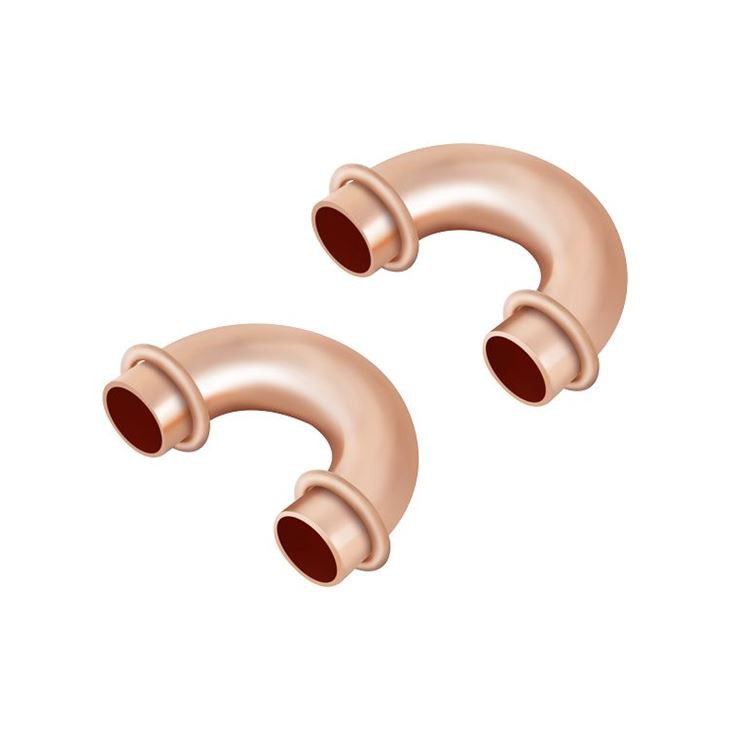

On the other hand, red copper U bends are relatively softer. While this may seem like a disadvantage, it actually makes them more malleable and easier to work with during installation. Installers can bend and shape red copper U bends more easily to fit specific system requirements without the risk of cracking or breaking.
3. Corrosion Resistance
Both red copper and regular copper have good corrosion resistance, but the presence of alloying elements in regular copper can sometimes enhance this property further. For example, some copper alloys used in regular copper U bends may contain elements like tin or nickel, which can form a protective oxide layer on the surface of the material, preventing corrosion. However, red copper also has inherent corrosion - resistant properties, especially in clean environments. In air - conditioning and refrigeration systems, where the refrigerant is typically a controlled substance and the internal environment is relatively clean, both types of U bends can provide long - term corrosion protection.
Manufacturing Process
The manufacturing process of red copper U bends and regular copper U bends also differs. Red copper U bends are usually made from high - purity copper rods or tubes. The manufacturing process often involves precise bending operations to achieve the desired U - shape. Special care is taken during the bending process to ensure that the internal surface of the U bend remains smooth and free of any defects that could impede the flow of refrigerant.
Regular copper U bends, being made from copper alloys, may require additional steps in the manufacturing process. The alloying elements need to be carefully mixed and melted to ensure a homogeneous composition. After that, the alloy is formed into rods or tubes, and then bent into the U - shape. The presence of alloying elements may also require different heat treatment processes to optimize the mechanical properties of the U bends.
Cost Considerations
In general, red copper U bends are more expensive than regular copper U bends. The high cost of red copper is mainly due to its high purity and the relatively complex manufacturing process. The raw material cost of high - purity copper is higher, and the manufacturing process requires more precise control to maintain the quality of the U bends. Regular copper U bends, on the other hand, are made from copper alloys, which are often less expensive than pure copper. The addition of alloying elements can also reduce the overall cost of the material while still providing acceptable performance for many applications.
However, when considering the cost, it is important to take into account the long - term benefits. As mentioned earlier, red copper U bends offer better thermal conductivity, which can lead to energy savings in the long run. In applications where energy efficiency is a top priority, the initial higher cost of red copper U bends may be offset by the reduced operating costs over the life of the system.
Applications
1. Red Copper U Bends
Red copper U bends are commonly used in high - end air - conditioning and refrigeration systems. These systems often require high - performance components to achieve optimal efficiency. For example, in large commercial air - conditioning units, where energy consumption is a significant concern, red copper U bends can help improve the overall efficiency of the system. They are also preferred in applications where precise temperature control is required, such as in medical refrigeration units or high - precision laboratory equipment.
2. Regular Copper U Bends
Regular copper U bends are widely used in a variety of air - conditioning and refrigeration applications, especially in less - demanding or cost - sensitive situations. They are commonly found in residential air - conditioning units, small - scale refrigeration systems, and some industrial applications where the performance requirements are not as strict. Their higher strength and hardness make them suitable for applications where the U bends may be subject to mechanical stress.
Conclusion
In summary, the differences between red copper U bends and regular copper U bends are significant in terms of material composition, physical properties, manufacturing process, cost, and applications. Red copper U bends offer superior thermal conductivity, better malleability, but are more expensive. Regular copper U bends, on the other hand, have higher strength and hardness, and are more cost - effective.
If you are in the market for high - performance air - conditioning or refrigeration systems and are looking for components that can provide optimal efficiency and long - term performance, red copper U bends may be the right choice for you. As a supplier of Red Copper U Bend, I can offer you high - quality products that meet your specific requirements. We also provide a wide range of related products such as Crossover Bend Copper Fittings and 15mm Copper U Bend.
If you are interested in our products or would like to discuss your specific needs, please feel free to contact us for procurement and negotiation. We look forward to working with you to provide the best solutions for your air - conditioning and refrigeration projects.
References
- ASM Handbook Volume 2: Properties and Selection: Nonferrous Alloys and Special - Purpose Materials.
- Copper Development Association Inc. (CDA) technical publications on copper and copper alloys.


