

Hey there! As a supplier of refrigeration filter driers, I often get asked about the efficiency rating of these nifty little devices. So, let's dive right in and break it down.
First off, what the heck is a refrigeration filter drier? Well, it's a crucial component in any refrigeration or air - conditioning system. Its main jobs are to remove moisture, contaminants, and acids from the refrigerant. You see, moisture in the refrigerant can cause all sorts of problems like ice formation in the expansion valve, corrosion of system components, and reduced efficiency of the whole system. Contaminants such as dirt, metal shavings, and debris can clog up the system and cause it to malfunction. And acids, which can form due to the breakdown of refrigerant or lubricating oil, can damage the compressor and other vital parts.
Now, let's talk about the efficiency rating. The efficiency of a refrigeration filter drier is typically measured in several ways. One of the most important metrics is moisture removal capacity. This is usually expressed in grams of water that the filter drier can absorb before it becomes saturated. A higher moisture removal capacity means that the filter drier can handle more moisture in the refrigerant, which is great for systems that might be exposed to humid environments or have a history of moisture ingress.

Another key factor is the particle filtration efficiency. This measures how well the filter drier can trap solid contaminants. It's often rated based on the size of the particles it can capture. For example, a filter drier might be rated to capture 99% of particles larger than 10 microns. The smaller the particle size it can effectively filter, the better. This is important because even tiny particles can cause big problems in a refrigeration system.
Acid removal efficiency is also a big deal. Acids in the refrigerant can be extremely corrosive, and a good filter drier should be able to neutralize and remove these acids. The acid removal capacity is usually measured in milligrams of acid that the filter drier can handle.
When it comes to choosing the right filter drier for a particular application, the efficiency rating is super important. You don't want to skimp on this. A low - efficiency filter drier might seem like a cheaper option upfront, but it can end up costing you a fortune in the long run due to system breakdowns, reduced efficiency, and premature component failure.
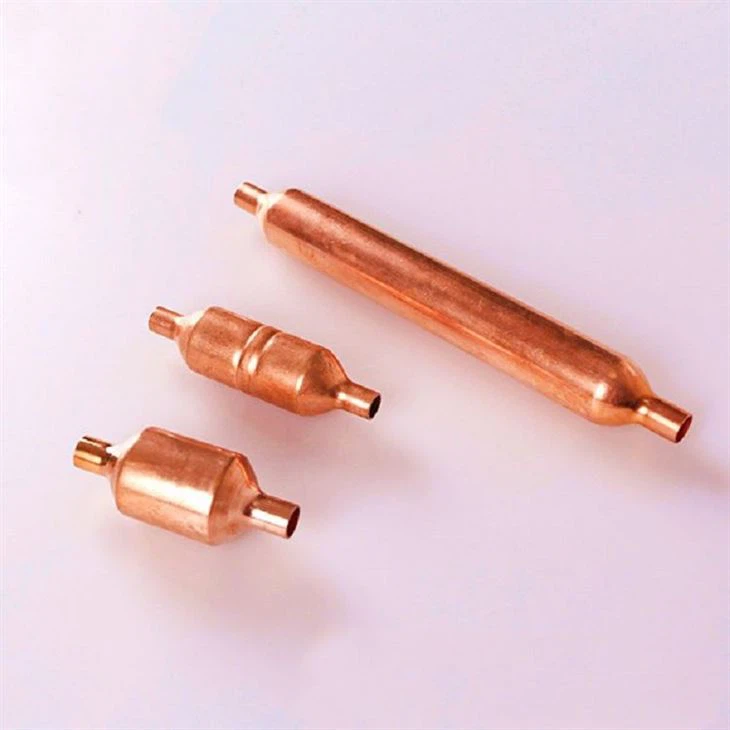
Let's take a look at some of the products we offer. We have the Refrigeration Copper Filter Drier. This bad boy is made of high - quality copper, which is known for its excellent heat transfer properties and corrosion resistance. It has a high moisture removal capacity and great particle filtration efficiency. It's suitable for a wide range of refrigeration systems, from small residential air - conditioners to large commercial refrigeration units.
Then there's the Two Way Filter Copper. This unique design allows for bi - directional flow, which is really handy in systems where the refrigerant flow might reverse. It also has top - notch acid removal efficiency, making it a great choice for systems that are prone to acid formation.
Our Copper Filter Drier for Refrigeration is another great option. It's designed to be highly efficient in removing both moisture and contaminants. It's compact and easy to install, making it a popular choice for retrofit applications.
But how do you know if a filter drier is really as efficient as it claims to be? Well, that's where testing and certification come in. Reputable manufacturers will subject their filter driers to rigorous testing in independent laboratories. Look for filters that are certified to meet industry standards such as those set by the American Society of Heating, Refrigerating and Air - Conditioning Engineers (ASHRAE). These certifications give you peace of mind that the filter drier will perform as advertised.
It's also important to consider the operating conditions of your refrigeration system. Factors like temperature, pressure, and refrigerant type can all affect the efficiency of the filter drier. For example, some filter driers are better suited for high - temperature applications, while others work best in low - pressure systems. Make sure to choose a filter drier that is designed to work optimally under the specific conditions of your system.
Regular maintenance and replacement of the filter drier are also crucial for maintaining its efficiency. Over time, the filter drier will become saturated with moisture, contaminants, and acids, and its efficiency will start to decline. Most manufacturers recommend replacing the filter drier at regular intervals, usually every one to two years, depending on the operating conditions of the system.
In conclusion, the efficiency rating of a refrigeration filter drier is a complex but important concept. It encompasses moisture removal capacity, particle filtration efficiency, and acid removal efficiency. When choosing a filter drier, make sure to consider the specific needs of your refrigeration system, look for certified products, and follow the manufacturer's recommendations for maintenance and replacement.
If you're in the market for high - efficiency refrigeration filter driers, we'd love to hear from you. Whether you're a contractor, a facility manager, or just someone looking to upgrade their home air - conditioning system, we have the products and expertise to meet your needs. Reach out to us to start a conversation about your specific requirements and how we can help you keep your refrigeration system running smoothly.
References
- ASHRAE Handbook of Refrigeration
- Manufacturer's product specifications for refrigeration filter driers