


The resistance to abrasion of a copper pipe U bend is a crucial factor that determines its durability and performance in various applications, especially in the fields of air - conditioning and refrigeration systems. As a trusted Copper Pipe U Bend supplier, I am well - versed in the properties and characteristics of these products, and I'm here to share in - depth knowledge about their abrasion resistance.
Understanding Abrasion in Copper Pipe U Bends
Abrasion refers to the process of wearing away the surface of a material due to mechanical action, such as rubbing, scraping, or friction. In the case of copper pipe U bends, abrasion can occur during installation, operation, or transportation. For example, during installation, the pipes may rub against other components or rough surfaces, causing scratches on the outer layer. In operation, the flow of refrigerants or other fluids inside the pipes can also cause internal abrasion over time.
Factors Affecting the Abrasion Resistance of Copper Pipe U Bends
1. Copper Quality
The quality of the copper used in manufacturing the U bends plays a significant role in their abrasion resistance. High - purity copper generally has better ductility and corrosion resistance, which also contributes to its ability to withstand abrasion. For instance, oxygen - free copper (OFC) is often preferred in applications where high performance and durability are required. OFC has fewer impurities, resulting in a more uniform and dense structure that can better resist the forces of abrasion.
2. Surface Finish
The surface finish of the copper pipe U bend can greatly influence its abrasion resistance. A smooth surface finish reduces the friction coefficient, making it less likely for the pipe to be abraded. Manufacturers use various techniques to achieve a smooth finish, such as polishing or coating the pipes. For example, a thin layer of anti - abrasion coating can be applied to the outer surface of the U bend, providing an additional protective barrier against abrasion.

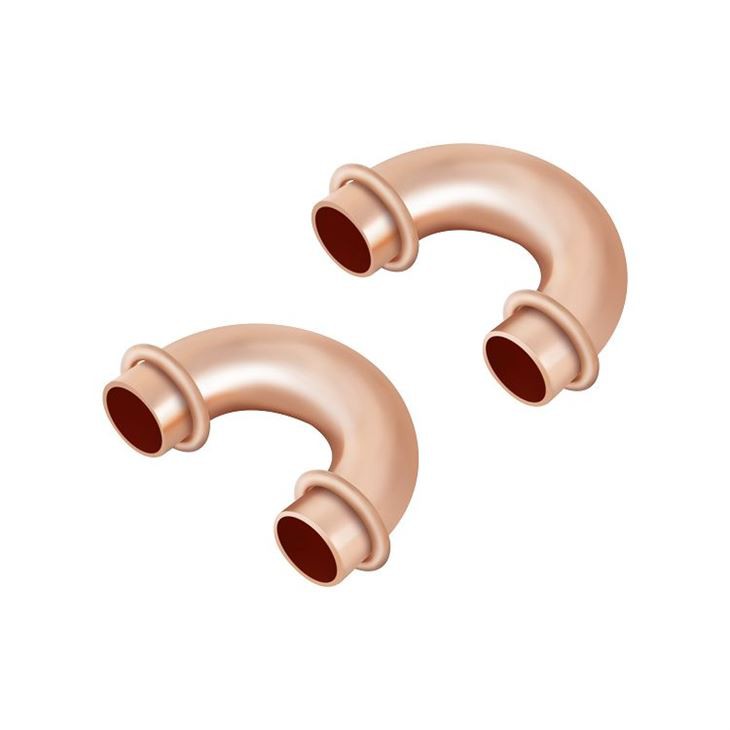
3. Bend Radius
The bend radius of the U bend also affects its abrasion resistance. A larger bend radius generally results in less stress concentration at the bend area, which can reduce the likelihood of abrasion. When the bend radius is too small, the copper at the bend may be more prone to cracking or deformation under stress, making it more vulnerable to abrasion.
Measuring the Abrasion Resistance of Copper Pipe U Bends
There are several methods to measure the abrasion resistance of copper pipe U bends. One common method is the Taber abrasion test. In this test, a sample of the copper pipe U bend is subjected to a rotating abrasive wheel under a specified load. The amount of material removed after a certain number of rotations is measured, and this value is used to evaluate the abrasion resistance of the sample.
Another method is the scratch test. A sharp object is used to apply a controlled force and scratch the surface of the copper pipe U bend. The depth and width of the scratch are then measured to assess the material's ability to resist scratching, which is an important aspect of abrasion resistance.
Importance of Abrasion Resistance in Applications
1. Air - Conditioning Systems
In air - conditioning systems, copper pipe U bends are used to connect different components, such as condensers and evaporators. The refrigerant flowing through these pipes can cause internal abrasion over time. If the U bends do not have sufficient abrasion resistance, they may develop leaks, which can lead to a decrease in the efficiency of the air - conditioning system and even system failure.
2. Refrigeration Systems
Similarly, in refrigeration systems, the durability of copper pipe U bends is crucial. These systems often operate under high pressure and low - temperature conditions, and the pipes are constantly exposed to the flow of refrigerants. Good abrasion resistance ensures that the U bends can withstand the harsh operating conditions and maintain the integrity of the system for a long time.
Our Products: Copper Pipe U Bends with High Abrasion Resistance
As a supplier of Copper Pipe U Bend, we are committed to providing products with excellent abrasion resistance. We use high - quality copper materials and advanced manufacturing processes to ensure the durability of our U bends.
Our Crossover Bend Copper Fittings are designed with a smooth surface finish and an optimal bend radius, which helps to reduce the risk of abrasion. Additionally, we offer optional anti - abrasion coatings for our products, providing an extra layer of protection.
Our Copper U Bend Fitting is suitable for a wide range of applications, from small domestic air - conditioning units to large - scale industrial refrigeration systems. We have strict quality control measures in place to ensure that each U bend meets the highest standards of abrasion resistance.
Conclusion
The abrasion resistance of copper pipe U bends is a complex property that is influenced by multiple factors, including copper quality, surface finish, and bend radius. Measuring this property accurately is essential to ensure the performance and durability of the pipes in various applications.
As a reliable supplier, we understand the importance of providing high - quality products with excellent abrasion resistance. If you are in the market for Copper Pipe U Bends, we invite you to contact us for more information and to discuss your specific requirements. We are ready to provide you with the best solutions for your projects.
References
- ASTM International. "ASTM Standards on Copper and Copper Alloys." ASTM International, 2023.
- ASHRAE Handbook. "Fundamentals." American Society of Heating, Refrigerating and Air - Conditioning Engineers, 2022.