


In the realm of refrigeration systems, the use of secondary refrigerants has gained significant traction due to their ability to enhance energy efficiency, reduce environmental impact, and improve system safety. As a leading supplier of refrigeration filters, we often encounter inquiries about the compatibility of our filters with refrigeration systems that utilize secondary refrigerants. This blog post aims to explore this topic in detail, shedding light on the availability and suitability of refrigeration filters for such systems.
Understanding Secondary Refrigerants
Before delving into the topic of refrigeration filters, it's essential to understand what secondary refrigerants are and why they are used in refrigeration systems. Secondary refrigerants are substances that absorb heat from a space or process and transfer it to a primary refrigerant, which then rejects the heat to the environment. Unlike primary refrigerants, which undergo a phase change during the refrigeration cycle, secondary refrigerants remain in a single phase.
Common secondary refrigerants include water, brines (such as calcium chloride and sodium chloride solutions), and glycols (such as ethylene glycol and propylene glycol). These substances are chosen for their low freezing points, high specific heat capacities, and non-toxicity. By using a secondary refrigerant, the amount of primary refrigerant required in the system can be reduced, which in turn minimizes the potential for refrigerant leaks and environmental damage.

The Role of Refrigeration Filters
Refrigeration filters play a crucial role in maintaining the performance and longevity of refrigeration systems. Their primary function is to remove contaminants from the refrigerant, such as dirt, debris, moisture, and acid. These contaminants can cause a variety of problems in the system, including reduced efficiency, increased wear and tear on components, and even system failure.
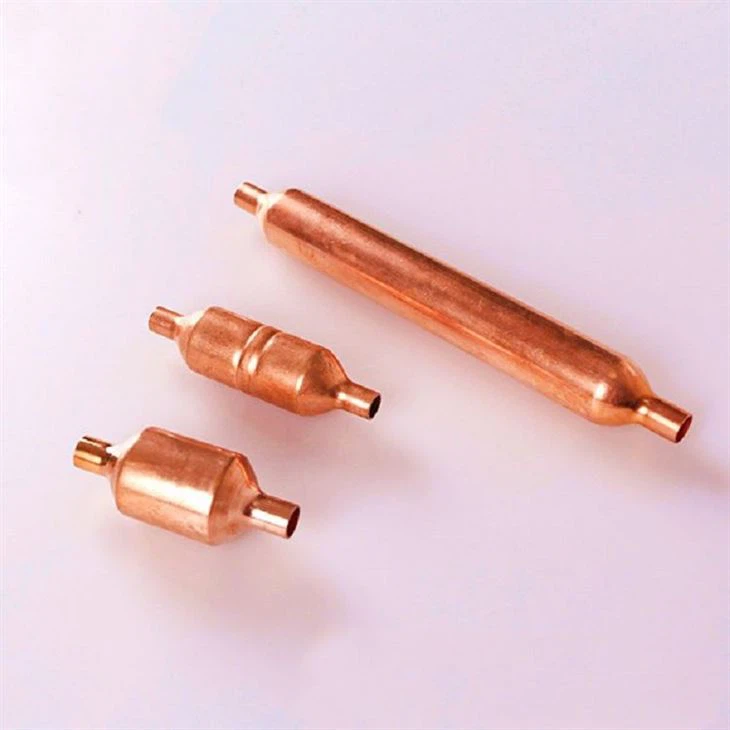
There are several types of refrigeration filters available, each designed to address specific contaminants. For example, Refrigeration Copper Filter Drier are commonly used to remove moisture and acid from the refrigerant. They contain a desiccant material, such as silica gel or molecular sieve, which absorbs moisture and reacts with acid to form a harmless compound.
Filter Drier Pipe Fitting are another type of filter that combines the functions of a filter and a drier. They are typically installed in the liquid line of the refrigeration system and are designed to remove both solid particles and moisture from the refrigerant.
Refrigeration Filter Drier are similar to filter drier pipe fittings but are available in a variety of sizes and configurations to suit different applications. They are often used in larger refrigeration systems, such as commercial and industrial refrigeration units.
Compatibility of Refrigeration Filters with Secondary Refrigerants
The compatibility of refrigeration filters with secondary refrigerants depends on several factors, including the type of secondary refrigerant used, the operating conditions of the system, and the design of the filter. In general, most refrigeration filters are compatible with common secondary refrigerants, such as water, brines, and glycols.
However, it's important to note that some secondary refrigerants may require special considerations when selecting a filter. For example, certain glycols can react with the desiccant material in a filter drier, causing it to break down and release particles into the refrigerant. In these cases, it's recommended to use a filter drier that is specifically designed for use with glycols.
Another factor to consider is the operating temperature of the system. Some secondary refrigerants have low freezing points, which means that the system may operate at sub-zero temperatures. In these cases, it's important to choose a filter that can withstand the low temperatures without becoming brittle or cracking.
Our Range of Refrigeration Filters for Secondary Refrigerant Systems
As a leading supplier of refrigeration filters, we offer a wide range of products that are suitable for use in refrigeration systems with secondary refrigerants. Our filters are designed to meet the highest standards of quality and performance, and they are available in a variety of sizes and configurations to suit different applications.
One of our most popular products is our Refrigeration Copper Filter Drier. This filter is made from high-quality copper and is filled with a premium desiccant material that provides excellent moisture and acid removal capabilities. It is available in a range of sizes, from small residential units to large commercial and industrial systems.
We also offer a range of Filter Drier Pipe Fitting that are designed to provide a convenient and cost-effective solution for removing contaminants from the refrigerant. These fittings are available in a variety of sizes and configurations, and they can be easily installed in the liquid line of the refrigeration system.
In addition to our standard products, we also offer custom-designed filters to meet the specific needs of our customers. Our team of experienced engineers can work with you to develop a filter that is tailored to your system's requirements, ensuring optimal performance and reliability.
Conclusion
In conclusion, there are indeed refrigeration filters that can be used in refrigeration systems with secondary refrigerants. By choosing the right filter for your system, you can ensure that your refrigerant remains clean and free of contaminants, which in turn will help to maintain the performance and longevity of your refrigeration system.
As a leading supplier of refrigeration filters, we are committed to providing our customers with the highest quality products and services. If you have any questions about our range of filters or need assistance in selecting the right filter for your system, please don't hesitate to contact us. We look forward to working with you to meet your refrigeration filtration needs.
References
- ASHRAE Handbook - Refrigeration. American Society of Heating, Refrigerating and Air-Conditioning Engineers.
- Refrigeration and Air Conditioning Technology. William C. Whitman, William M. Johnson, John Tomczyk, and Eugene Silberstein.
- Refrigeration Systems and Applications. Reinhard Radermacher, Eckhard A. Groll, and Jan F. Kreider.