


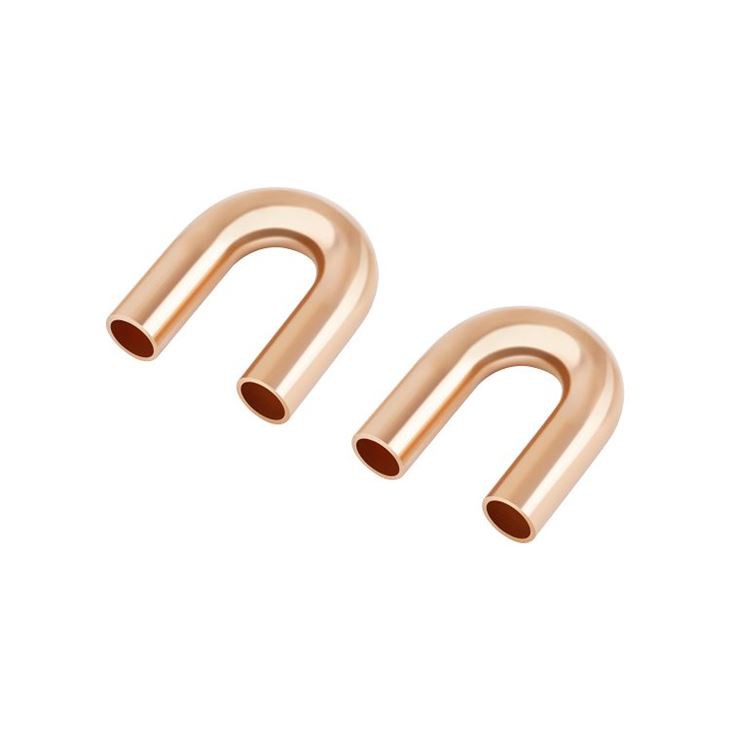
As a supplier of Copper U Bend Fittings, I've been deeply involved in the manufacturing process of these essential components for quite some time. One question that frequently comes up in industry discussions and from our customers is whether copper U bend fittings need to be annealed during manufacturing. In this blog, I'll delve into this topic, exploring the reasons behind annealing, its impact on the quality of the fittings, and whether it's a necessary step in our manufacturing process.
Understanding Annealing
Annealing is a heat treatment process that involves heating a metal to a specific temperature and then slowly cooling it. This process is used to alter the physical and sometimes chemical properties of the metal, making it more ductile and less brittle. In the context of copper U bend fittings, annealing can significantly affect the fitting's ability to be bent into the desired U shape without cracking or breaking.

When copper is cold-worked, such as during the bending process to create U bend fittings, its crystal structure becomes distorted. This distortion can lead to increased hardness and decreased ductility, making the copper more prone to cracking. Annealing helps to relieve the internal stresses caused by cold working and restore the copper's original ductility.
The Benefits of Annealing Copper U Bend Fittings
One of the primary benefits of annealing copper U bend fittings is improved formability. During the manufacturing process, the copper tubes need to be bent into a precise U shape. Without annealing, the copper may crack or develop internal defects during bending, leading to a higher rate of rejects. Annealed copper is more malleable, allowing it to be bent smoothly and accurately, resulting in high-quality fittings with a consistent shape and size.
Another advantage of annealing is enhanced corrosion resistance. The heat treatment process can help to remove impurities and oxides from the surface of the copper, creating a more uniform and protective oxide layer. This layer acts as a barrier against corrosion, extending the lifespan of the fittings and ensuring their reliability in various applications, such as Copper Pipe Fitting 180 Degree U Bend used in air conditioning and refrigeration systems.
Annealed copper U bend fittings also have better mechanical properties. They are less likely to deform under stress, which is crucial in applications where the fittings are subjected to pressure or vibration. This increased durability ensures that the fittings can withstand the rigors of use in industrial and commercial settings, reducing the need for frequent replacements and maintenance.
Factors to Consider When Deciding Whether to Anneal
While annealing offers numerous benefits, it's not always necessary for every copper U bend fitting. The decision to anneal depends on several factors, including the type of copper used, the thickness of the tube, and the specific application of the fitting.
Some types of copper, such as oxygen-free copper, are naturally more ductile and may not require annealing for most applications. These coppers have a lower oxygen content, which reduces the risk of embrittlement during cold working. On the other hand, coppers with a higher oxygen content may benefit from annealing to improve their formability and reduce the risk of cracking.
The thickness of the copper tube also plays a role in the annealing decision. Thicker tubes are more likely to develop internal stresses during bending and may require annealing to relieve these stresses. Thinner tubes, however, may be more flexible and less prone to cracking, making annealing less necessary.
The application of the copper U bend fitting is another important consideration. In applications where the fitting will be subjected to high pressure or extreme temperatures, annealing can provide additional strength and durability. For example, U Copper Pipe used in refrigeration systems often requires annealing to ensure it can withstand the pressure changes and temperature fluctuations in the system.
Our Approach as a Supplier
At our company, we carefully evaluate each order to determine whether annealing is necessary for the copper U bend fittings. We take into account the customer's specifications, the type of copper used, and the intended application of the fittings. For applications where formability, corrosion resistance, and mechanical strength are critical, we recommend annealing to ensure the highest quality of the fittings.
We use state-of-the-art annealing equipment and processes to ensure consistent and precise heat treatment. Our technicians closely monitor the annealing process to control the temperature and cooling rate, ensuring that the copper retains its desired properties. After annealing, the fittings are thoroughly inspected to ensure they meet our strict quality standards.
Conclusion
In conclusion, annealing can be a valuable step in the manufacturing of copper U bend fittings, offering improved formability, corrosion resistance, and mechanical properties. However, it's not always necessary for every fitting, and the decision to anneal should be based on several factors, including the type of copper, tube thickness, and application.
As a supplier of Refrigeration Copper Fittings, we are committed to providing our customers with high-quality products that meet their specific needs. Whether you require annealed or non-annealed copper U bend fittings, we have the expertise and resources to deliver the right solution for your application.
If you're interested in learning more about our copper U bend fittings or have any questions about the annealing process, please don't hesitate to contact us. We'd be happy to discuss your requirements and provide you with a customized solution.

References
- ASM Handbook Volume 4: Heat Treating. ASM International.
- Copper Development Association. Technical information on copper and copper alloys.


