

As a supplier of Air Conditioning U Bends, I've witnessed firsthand the critical role these components play in the overall performance of air conditioning systems. One aspect that often goes unnoticed but is of utmost importance is the smoothness of the inner surface of an air conditioning U bend. In this blog post, I'll delve into why this smoothness is so crucial and how it impacts the efficiency and longevity of air conditioning units.
The Basics of Air Conditioning U Bends
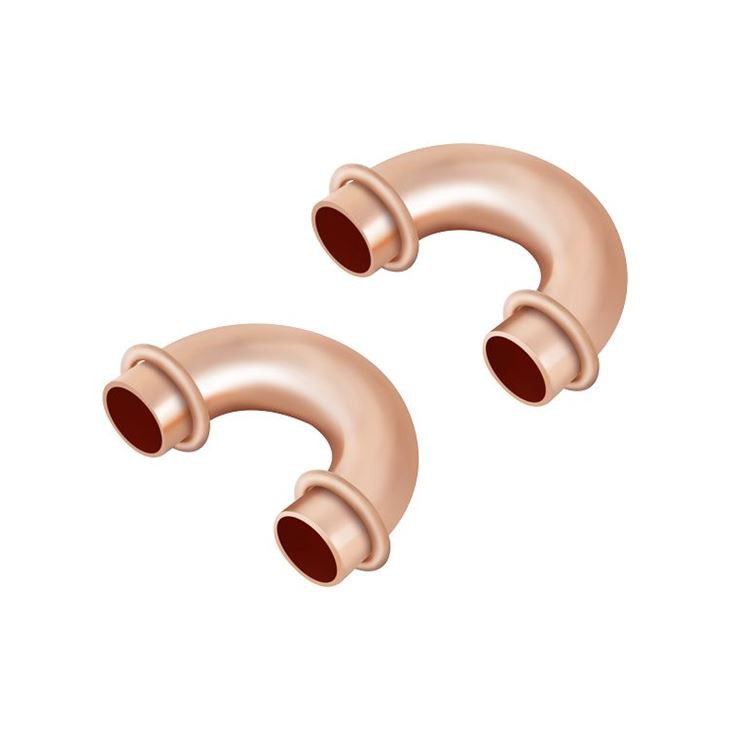
Before we dive into the significance of inner surface smoothness, let's briefly understand what an air conditioning U bend is. U bends are essential components in air conditioning and refrigeration systems. They are used to change the direction of refrigerant flow within the system. These bends are typically made from copper due to its excellent thermal conductivity and corrosion resistance.

There are different types of U bends available, such as the Copper Pipe Fitting 180 Degree U Bend, Air Conditioning Copper Pipe Fittings, and Crossover Bend Copper Fittings. Each type serves a specific purpose in the refrigerant circuit, but they all share the common requirement of a smooth inner surface.
Importance of Smooth Inner Surface
1. Reduced Friction and Pressure Drop
One of the primary reasons for maintaining a smooth inner surface in an air conditioning U bend is to minimize friction. When refrigerant flows through a U bend, any roughness on the inner surface can cause the refrigerant to experience resistance. This resistance leads to an increase in pressure drop across the bend.
A high-pressure drop is detrimental to the efficiency of the air conditioning system. It forces the compressor to work harder to maintain the required refrigerant flow, which in turn increases energy consumption. According to industry research, even a small increase in pressure drop can result in a significant decrease in system efficiency and an increase in operating costs over time.
2. Prevention of Refrigerant Turbulence
A smooth inner surface helps to ensure laminar flow of the refrigerant through the U bend. Laminar flow is characterized by the orderly movement of fluid particles in parallel layers, with minimal mixing between the layers. In contrast, a rough inner surface can cause the refrigerant to become turbulent.
Turbulent flow disrupts the normal flow pattern of the refrigerant, leading to increased energy losses and reduced heat transfer efficiency. It can also cause vibrations within the system, which may lead to premature wear and tear of components. By maintaining a smooth inner surface, we can promote laminar flow and ensure the efficient operation of the air conditioning system.

3. Corrosion Resistance
The smoothness of the inner surface also plays a role in the corrosion resistance of the U bend. A rough surface provides more areas for corrosion to start. Corrosion can lead to the formation of pits and cracks on the inner surface of the U bend, which can eventually cause leaks in the refrigerant circuit.
Copper is a relatively corrosion-resistant material, but a smooth inner surface enhances its natural resistance. It reduces the likelihood of corrosion by minimizing the contact area between the refrigerant and any potential contaminants or impurities on the surface. This helps to extend the lifespan of the U bend and the overall air conditioning system.
4. Improved Heat Transfer
In an air conditioning system, heat transfer is a critical process. The refrigerant absorbs heat from the indoor environment and releases it outside. A smooth inner surface of the U bend allows for better heat transfer between the refrigerant and the walls of the pipe.
When the inner surface is rough, the refrigerant may not come into full contact with the pipe walls, reducing the efficiency of heat transfer. On the other hand, a smooth surface ensures that the refrigerant has maximum contact with the pipe walls, facilitating efficient heat exchange. This results in better cooling performance and improved energy efficiency of the air conditioning system.
Manufacturing Processes to Ensure Smooth Inner Surface
At our company, we take several steps during the manufacturing process to ensure that our Air Conditioning U Bends have a smooth inner surface. First, we use high-quality copper materials that are free from impurities and defects. This provides a good foundation for achieving a smooth surface.
We also employ advanced bending techniques that minimize the formation of wrinkles or irregularities on the inner surface. After bending, the U bends undergo a thorough cleaning process to remove any debris or contaminants that may have accumulated during manufacturing. Finally, we conduct strict quality control inspections to ensure that the inner surface meets our high standards of smoothness.
Conclusion
In conclusion, the smoothness of the inner surface of an air conditioning U bend is of utmost importance for the efficient and reliable operation of air conditioning systems. It reduces friction and pressure drop, prevents refrigerant turbulence, enhances corrosion resistance, and improves heat transfer. As a supplier of Air Conditioning U Bends, we are committed to providing high-quality products with smooth inner surfaces to meet the needs of our customers.
If you are in the market for Air Conditioning U Bends or have any questions about our products, we encourage you to contact us for a purchase negotiation. Our team of experts is ready to assist you in finding the right solutions for your air conditioning and refrigeration needs.
References
- ASHRAE Handbook of Refrigeration. American Society of Heating, Refrigerating and Air - Conditioning Engineers.
- "Fundamentals of Heat and Mass Transfer" by Frank P. Incropera and David P. DeWitt.